
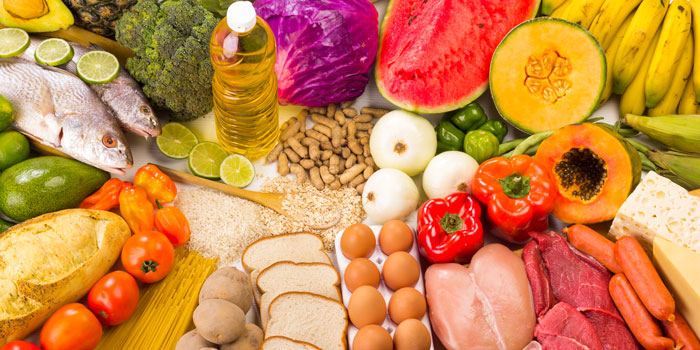
When it comes to dieting, you can find a lot of articles all over the internet explaining how to lose weight and get leaner in a very little amount of time. However, if you feel too skinny and you decided to hit the gym to gain some muscle and build some mass, you might have a harder time to find valuable information. As many hard gainers can witness, a good bulk is not something easy to accomplish. That is why I am here today to give you some advices that will get you on the right path toward your physique objectives.
Managing your bodyweight starts from a very simple statement. Your body needs a certain number of calories to maintain its mass. If you go under that amount, you will lose weight and if you go over, you will gain some. It is as simple as that. You have two ways to calculate your maintenance, the first one is to follow the same diet for one to two weeks and tracking all your calories every time you get something to eat. If your weight has not changed at the end of this period, you get an approximation of your maintenance. All you must do is to up the number of calories from 10-15% to start to gain weight.
If that seems too complicated, you can just find a way to calculate that maintenance depending on your age, weight, height and activity. The formulas are available on the internet and a lot of apps can now do it directly for you.
Now that you know your maintenance, you can easily create a surplus and start to build some mass! However, it is not enough if you want to keep your bulk clean.
Indeed, you can get some weight by eating ridiculous amounts of cookies and pizzas everyday, but I don’t think that you started bulking to get fat and unhealthy. For a good bulk, you need to keep your diet clean and get the right amount of every macronutrients.
As many people know, proteins are essential to build muscle, so they might think that increasing their intake as much as possible is a good idea to bulk up. It is not! Proteins, unlike fats or carbs, cannot be stored by your body. Thus, your body will use the amount it needs and naturally evacuate the rest. That is why feeding yourself with protein powders and chicken breasts ten times a day will not be efficient for you. It is generally advised to get around 1g of protein per pound of bodyweight to get optimal results.
Fats should also be a very important part of your diet and people should not be afraid of it whether it is for bulking or for cutting. Although, some are to avoid like trans fats, there are a lot of healthy fats such as Omega 3, 6 and 9 that you can find in nuts, olive oil and fatty fishes for example, that are essential for your body. It is usually recommended to get around 20% of your all calorie intake from fats. However, as a gram of fat offers way more calories than proteins and carbs (9kcal instead of 4Kcal for the two others), you can up a bit that amount to boost your calories intake and take your
Last but not least, carbohydrates are not to forget as they are the first source of energy for your body! Carbs are divided into two categories, simple and complex. The simple carbs (sugar, fruits, candies… ) will give you instant energy but will not last for long. We generally advise to take them during or just after your training to keep the energy going or to rise insulin levels and start building muscle after the effort. The complex carbs (rice, pastas, bread, potatoes… ) are longer to assimilate and therefore, will give a sustained amount of energy on a longer period. Once you have calculated your needs for proteins and fats, all other calories needed to get to the desired amount should be coming from carbs.
Now, you have all the basics to start a good bulk! With a diet in calorie surplus filled up with the right nutrients, there is no reason for you not to reach your goal. You just have to be patient, consistent and hardworking while training.
 Confessions of a Weight Loss Freak